
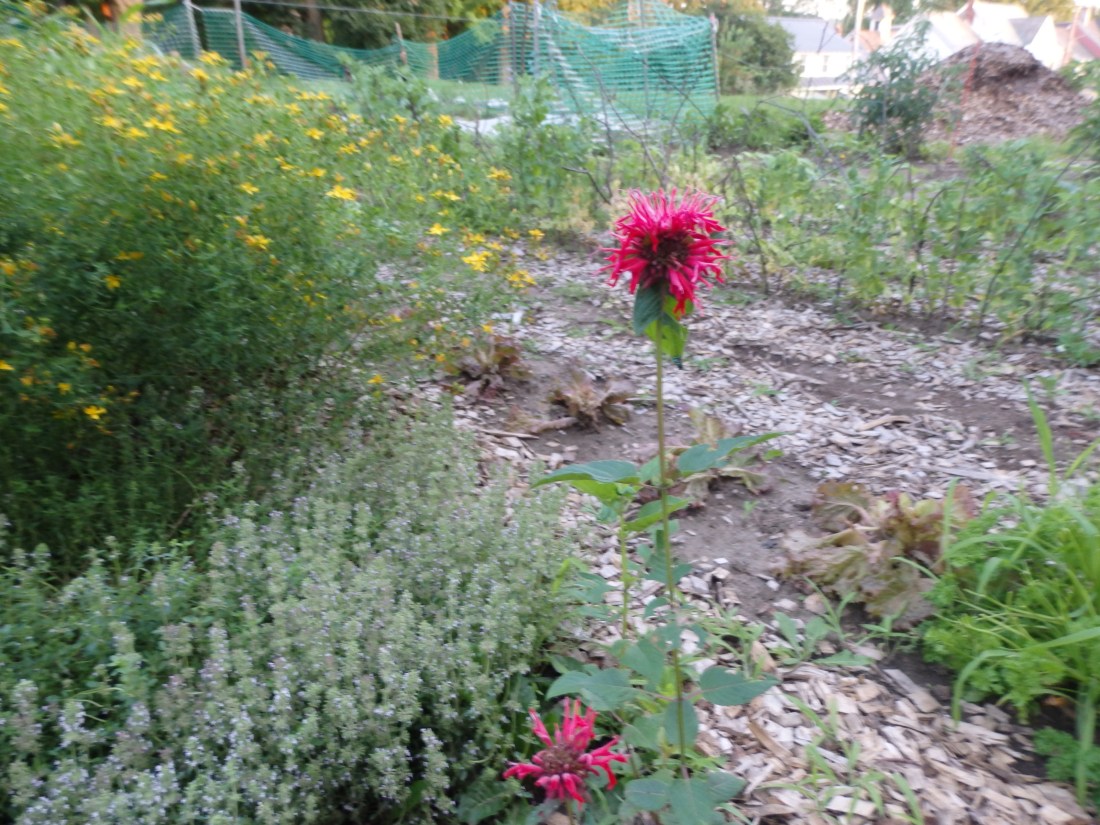
The hummingbird flew through the neighborhood, but the rows of lawns had very few flowers, which was what she needed. Finally, she found some bee balm, which offered delicious nectar. In addition, she saw a robin pecking at insects on the ground and a monarch feeding on milkweed. Many pollinators and bird species are facing declining numbers due increased urbanization and habitat loss. Nevertheless, they are important for pollinating food crops which we depend on and are also crucial in keeping a large number of pest insects in check. Providing plants which fulfill these ecological roles can go a long way in helping their populations as well as providing food and a connection to nature for us. Once again, it is time for the annual wildlife gardening article and native plants, such as the ones highlighted below, provide more and better food than most conventional garden plants.
Strawberry (Fragaria virginia)
Light: sun to part shade
Soil: well drained
Height: 3-4 inches
Bloom time: white flowers in May and fruit in June
This plant provides flowers early in the season when many others haven’t come out yet and the berries are popular with both birds and people. The plants easily spreads and does require some space, though I have successfully done in it in my community plot for several years now. Strawberries also work well as a ground cover.
New England Aster (Aster novae-angliae)
Light: sun to partial sun
Soil: moist
Bloom time: purple flowers from August to October
Height: 24-60 inches
Range: Massachusetts and Vermont west to N. Dakota and Wyoming south to Virginia, N. Carolina, Alabama, and New Mexico.
This plant is important food source for bees in late fall as well as being a host plant for checkerspot and crescent butterflies
Bee Balm (Monarda Didyma)
Light: sun to part shade
Soil: average to dry
Bloom time: red flowers in July
Height: 36 to 48 inches
Range: Maine west to Michigan and south to New Jersey W. Virgina, Ohio and northern Georgia.
This plant is extremely popular with bumblebees and is also a host plant for the hermit sphinx moth. The leaves can also be used for a tea which was a Native American remedy coughs and respiratory illnesses. It is also a plant that works fine in a community plot, as I have it in mine.
Lupine (Lupinus perrenis)
Light: Sun to part shade
Soil: well drained
Bloom time: blue , purple, pink, and white flowers in spring
Height: 14-30 inches
It is a host plant for the Karner blue butterfly and painted lady. It also attracts long tonged bumble bees and mason bees.
Butterfly weed (Asplepias tuberos)
Light: sun
Moisture: wet to dry
Blooms: orange flowers in summer to early fall
Height: 2 ft.
Range: New England south to Florida and west to Minnesota, southern Dakota, and Arizona.
It is a member of the milkweed family and therefore a host plant for monarch butterflies. It also attracts swallowtails, fritillaries, hummingbirds, and many bees.
Purple Coneflower (Echinacea purpurea)
Light: sun
Moisture: Average
Bloom time: Purple flowers summer to early fall
Range: Illinois and Iowa to Oklahoma, southern Michigan to northern Texas, and Georgia
This flower is a host plant for checkerspot butterflies and also attracts bumblebees, sweat bees, monarchs, swallowtails, and sulphurs. In addition, the leaves can be used for tea which is a common remedy for coughs and colds. Both coneflowers and butterfly weed are also fine in community plots. I have both in mine.
Blueberry (Vaccinium angustifolium and corymbosum)
Light: sun
Moisture: average
Bloom: white flowers in spring and fruit in summer
Height: 2 ft for V. angustifolium also known as low bush and 10 feet for V. corymbousum also known as high bush
Range: Low bush goes somewhat farther north reaching into Labrador and Manitoba going south to New Jersey, Pennsylvania, and North Carolina. High bush goes north to Nova Scotia and Massachusetts west to Michigan and south to Okalahoma and eastern Texas.
It is a host plant for the striped hairstreak butterfly and also attracts andrena mining bees, bumble bees, and mason bees. Fruit is popular with both birds and people.
Raspberry (Rubus ordoratus)
Light: sun
Moisture: moist to well drained
Bloom: rose-purple flowers in early summer and fruit in late summer to early fall
Height: 5 ft.
Range: Nova Scotia to Maine west to Michigan and south to North Carolina and Tennessee.
Serviceberry (Amelanchier arborea)
Light: sun to part shade
Moisture: average
Bloom: white flowers in spring and red-purple fruit in early summer
Height: 25 feet
Range: Quebec west to Minnesota south to Iowa and North Carolina
This tree is a host for Weidenmeyer admiral butterflies and the western swallowtail. It also attract many bee species. The western serviceberry (Amelanchier ainfolia) grows to about 30 feet and is native to Alberta and Manitoba south to Minnesota, Colorado, and northern California.
American Holly (Ilex opaca)
Light: sun
moisture: well drained
Bloom time: red fruit from fall to winter
Range: Maine to Maryland west to Texas, Kentucky, and Missouri.
This tree offers both greenery in the winter and an important food source for birds when many others are not available.
Pin Cherry (Prunus pennsylvanica)
Light: sun
Soil: dry to moist
Height: 40 ft.
Bloom time: white flowers in mid spring and fruit in summer, with red, orange, and yellow foliage in the fall
Range: Newfoundland and Labrador south to Pennsylvania and North Carolina, west to British Columbia , Minnesota and Colorado.
Pacific crabapple (Malus fusca)
Bloom time: white or pink flowers in early summer and fruit in late summer
Range: Southern Alberta along the Pacific coast and northern California.
Other important resources on this topic include The National Wildlife Federation, which include a plant finder where you can enter your zip code and it will give you a list of plants native to your area. Native Plants of the Northeast by Donald J. Leopold and Attracting Native Pollinators published by the Xerces Society also include comprehensive information. In addition my previous articles include ones on shade tolerant plants (2024), plants that are food for both wildlife and people (2022), and plants adapted to small spaces (2021).
A large number of birds, butterflies, and birds are facing declining numbers largely due to habitat loss. However, small garden patches and even plants on balconies can go a long way to providing the food and shelter that these species need. In addition, many plants that attract wildlife, such as the various berry plants and fruit trees, are equally beneficial for people, while also adding color, song, and life to our own habitats. Happy Spring!

