Hybrids May Offer a Second Chance to Chestnuts and Elms

He walked through the garden when he noticed an odd canker on the chestnut tree. While this could have been a scene from the recent past, chestnut blight was discovered in the New York Botanical Gardens in 1904. Dutch elm disease was first identified in the U. S. in 1930 and was likely introduced into Europe from Asia during World War I. Both of these have resulted in significant losses in both of these species of trees. However, in recent years, through a combination of identifying resistant individuals and breeding programs, there have been efforts to give both species a second chance.

Savannah Ferreira, the Forest Health Specialist for the Vermont Department of Forests, Parks, and Recreation, stated that both American Chestnuts (Castanea Dentata) and American elms (Ulmus americana) are “severely impacted by the diseases.” In their native ranges, they have provided food, timber, habitat, and erosion control. Chestnuts were one of the most important food-producing trees for both large and small wildlife. Ferreira said that as chestnuts became less prevalent, they were replaced by other (and sometimes invasive species).

Both chestnut blight and Dutch elm disease are caused by fungi. Chestnut blight is caused the fungus Cryphonectrea parasitica and was accidentally imported from Asia. Ferreira said that the spores find a wound in the bark and grow through the cambium layer, where tree growth takes place, preventing water and nutrients from reaching the upper part of the tree and subsequently killing it. The symptoms include reddish brown patches that develop into swollen or cracked cankers, which kill twigs, limbs and eventually the tree. Yellow or orange masses of spores ooze from fruiting bodies on or around the cankers. It is spread by the wind, splashing rain, people transporting infested wood, animals, and can also persist in the root system for years. Ferreira said that the fastest form of transmission was typically through root grafts, with wind as the next fastest. She said animals can pick up spores, but they would have to carry it to another chestnut tree.

Dutch elm disease is caused by three species of fungus in the genus Ophistoma. It is spread by the European elm bark beetle and the American elm bark beetle. The beetles seek out dead or weakened trees and excavate a gallery in between the bark and the wood where they lay their eggs. If the fungus is present, adult beetles can carry it on their bodies when they emerge. When they feed on the leaves of the tree, some of the fungus can get dislodged. It colonizes the xylem, which is an inner layer of the tree’s wood, and as with chestnut blight, prevents water and nutrients from reaching the tree, thereby killing the tree. The leaves wilt and turn a dull green to yellow or brown and drop early. Ferreira noted that elms coevolved with the American elm bark beetle and could tolerate them more easily than the European variety. In addition, she also said that elms were not the only host for them either, which put less pressure on the trees. In addition to natural resistance, predation can also play a role in keeping pests in check. Ferriera said that research may not be available, but many beetles are preyed on by woodpeckers as well as parasitic wasps and flies.

In recent years, there have been efforts to bring both species back through a variety of breeding programs. The American Chestnut Foundation (TACF) crosses the American chestnut with the Chinese chestnut (Castanea mallisimo) for resistance to chestnut blight. Chinese chestnuts coevolved with the disease and are therefore, more easily able to tolerate it. Deni Ranguelova, the New England Regional Science Coordinator for TACF, acknowledged that the original plan wasn’t “as evolved” as it could have been, but said the main focus was on tolerance of the disease rather than resistance. In addition to chestnut blight, the foundation also breeds for tolerance to Phytopthora root rot, which is caused by the soil pathogen P. cinnamomi. PRR, as it is known, attacks the root system below ground, though it is primarily found in the southern part of the country. The foundation uses computer models with DNA profiles along with field measured responses to the diseases to predict which trees will be the most tolerant of the diseases. The top 10% are planted in seed orchards with the remaining 90% planted in offspring test sites. The trees are then evaluated in a variety of environments for blight resistance and also used to update computer models for selection accuracy. The hybrids are then backcrossed with pure American chestnuts with the goal of disease tolerance as well as maintaining 70% American ancestry.

Ranguelova said that in addition to the seed orchards and evaluation sites, some trees have been replanted in the wild, but these are not as closely monitored. She said some Japanese chestnuts have been used in the crosses, but that Chinese chestnuts were more cold tolerant and better suited to the North American climate. She said the foundation only breeds chestnut trees, but noted that all diseases “were important” and she would “volunteer for other organizations.” She also said that the hybrids were still considered American chestnuts, officially designated as Castanea dentata, and the goal was to restore the trees to their native range and fulfill their ecological role.

Regarding TACF’s work, Ferreira said that hybrids would “hopefully” allow the return of chestnuts to their native ecosystems. She noted that there are resistant elms for sale in some nurseries, which are less susceptible, but are not immune. She said scientists are breeding both resistant elms as well as nonresistant ones with other species of elms. She also said that there are “aspects” of hybrids that may fulfill certain ecological roles, but only the American chestnut can fulfill 100% of its ecological role and the same hold true for the American elm. American chestnuts can reach heights of 60-100 feet. By comparison, Chinese chestnuts generally only grow to about 30 feet.

Unlike pests such as the emerald ash borer and the spotted lantern fly, chestnut blight and Dutch elm disease, have been in North America for over 100 or nearly 100 years, respectively. So, can something be learned from “established” diseases in order to address more recent invasive pests? Ferreira said yes and emphasized the importance of diversification in urban and forest landscapes. She said that when the focus is only on one genus or species, there is an “increased risk of large scale impacts by invasive species.” Ferreira also noted that the “gears were shifting from reporting diseased trees to non-diseased or potentially resistant trees.” She recommended treesnap.org as a place where such trees could be reported in order to further efforts of breeding resistant individuals.

Invasive pests and diseases have been a serious threat for a long time. However, an understanding of the importance of biodiversity as well as how species can evolve to combat pests can go a long way to giving some species a second chance. For related topics, see my articles on Asian jumping worms from August of 2024, Asian carp from February of 2023, the spotted lanternfly from November of 2021 and endangered plants from May of 2023.
Being Green: Grasses and Groundcovers Create Important Habitat

The butterfly flew from one lawn to the next looking for food, but all there was only grass with nothing else. Finally, she found some low growing flowering sedges. There were other butterflies as well as bees here, too, and a bit farther off, a child played fetch with a dog. Lawns are one of the most common sights and for a groundcover or a place to kick a ball around, they have their uses. However, most traditional turf grasses aren’t native to North America, are frequently invasive, and require a large amount of care. Nevertheless, there are a large number of native grasses which provide important habitat for a large variety of species, generally require less mowing and no fertilizer, and still be a place for people as well.

Grasses:

Pennsylvania Sedge (Carex pennsylvania)

This grass reaches about 9 inches tall, requires well drained dry soil, and tolerates shade. It stops growing by early summer and generally only needs to be mowed once to twice a year to stay 4-5 inches. It is native to New York and Maine south to Virginia, the Carolinas, and Tennessee, and west to Washington, California, and New Mexico.

Plantain sedge (Carex plantaginea)

This grass grows to 12 inches, needs moist soil, and shade to partial shade. It has bright green leaves and small yellow flowers in early spring. It is native to New Brunswick and southern Quebec to southern Indiana, Kentucky, New Jersey, Maryland, and northern Georgia.

Poverty oat grass (Danthonia spicata)

This grass reaches 8-16 inches and also only needs mowing once to twice a year. It is native to most of the United States and needs well drained or seasonally moist soils and full sun, though it will tolerate dry and nutrient poor soils. Flattened oat grass (Danthonia compressa) is native to the eastern U.S. and California oat grass (Danthonia Californica) is native west of the Rockies.

Groundcovers:

Common strawberry (Fragaria virginiana)

Strawberries grow 3 to 6 inches, have small white flowers in May and fruit in June. They are native throughout North America. After fruiting they send out runners, and so spread easily and are an excellent groundcover. They attract bees, butterflies, and birds (and, of course, people too!)

Moss phlox (Phlox subulata)

This flower grows 2 to 6 inches tall, needs well drained soil and has pink flowers from April to May. It is native to southern New York to southern Michigan and south to North Carolina and Tennessee.

“Traditional” lawns are essentially a monoculture and provide little in the way of biodiversity. Nevertheless, there are larger spaces where grasses and groundcovers are the best option for that particular area. For such places, native grasses and groundcovers can provide both food, nesting, and overwintering sites as well as a green place for people, pets, and pollinators.

As always, not using pesticides or fertilizers is also important in creating habitat for birds, bees, and butterflies. For other resources, go to plant finder on the National Wildlife Federation (www.nwf.org), put in your zip code and the site will provide a list of all plants native to your area. For my other articles on wildlife gardening, including plants for small spaces, shade tolerant plants, and food plants for both people and wildlife see April 2019, May 2020, May 2021, July 2022, June 2023, and June 2024.

Passive Buildings Offer Possibilities for Greater Sustainability

“This must be a most inconvenient sitting room for the evening in summer; the windows are full west.” So spoke Lady Catherine de Bourgh in Jane Austen’s Pride and Prejudice upon entering the house of the main character, Elizabeth Bennet. In the modern age, with electricity and central heating, window orientation is generally not the first thing most of us would notice. But what if we did think about these aspects when designing buildings? Size and placement of windows, along with types of insulation, can greatly influence a building’s ability to stay warm in the winter and cool in the summer. This can, in turn, significantly affect energy costs and carbon emissions.

David Colon, Phius Customer Services Associate for Phius, which certifies sustainable buildings, stated that structures with greater energy efficiency reduce the strain on the electrical grid and that such emissions account for 40% of US carbon emissions. He also noted that these buildings also provide their occupants with constantly filtered air, a quiet atmosphere, even temperature distribution, and reliability in the face of extreme weather events.

Phius focuses on what it calls “passive buildings,” which means that energy efficiency is achieved through the structure’s design, insulation, and window placement rather than through external systems, such as solar panels. In doing so, this reduces energy need right from the start. Haley Harlow, Phius Building Certification Manager, emphasized the importance of “continuous insulation, an airtight envelope, high performance windows, balanced heat and moisture, ventilation, and minimal mechanical systems,” for the purposes of achieving maximum efficiency. Matthew Smith, Public Relations Manager for Efficiency Vermont, which assists people with weatherization, stated that insulation and making buildings more air sealed were “the two most important things.”

Colon stated that the best forms of insulation were those with the largest resistance to heat transfer per thickness. He said the ones most commonly used in Phius structures were foam based insulation, such as high density closed cell spray foam and polylsocyanurate. He also said that most insulation was locally sourced, which reduced carbon emissions and local materials were generally the ones best suited to that area. He gave the example of wood fiber worked well in Maine, but not in Texas, due to termites.

Colon noted that windows were frequently the parts of a building where heat is lost and stated that moderate glazing is often needed and that windows shouldn’t exceed 35% of the window to wall ratio. He also said that windows should be shaded year- round in hot climates, but only in the summer in colder climates. He emphasized the importance of having a well-insulated, compact building with an “appropriate” amount of windows.

While external building materials may seem to be important, both Colon and Harlow stressed insulation and the prevention of heat loss. Harlow said that exterior materials “generally” have little impact on performance. Adobe is frequently cited as one of the better building materials, due to its super insulative qualities. However, Harlow noted that while adobe works well in a dry climate because it absorbs heat during the day and releases it at night, thus keeping indoor spaces cool during the day and warm and night, it would not work as well in other part of the country because it would require transportation and so increase the carbon footprint.

So building with better insulation and more efficient windows is great, but what about that old apartment building with the drafty windows? Can anything be done about that? Colon and Smith both answered in the affirmative, saying that existing buildings can be upgraded for higher efficiency. Colon recommended starting with replacing windows and identifying major sources of air leakage. This, he said, would result in minimizing the loads needed for heating and cooling. Smith said that Efficiency Vermont’s method was to give a “virtual home visit” and identify “what’s working and what isn’t.” Phius refers to it projects as “passive buildings” rather than “houses” and both Colon and Smith stated that their respective organizations work on a variety of structures, including single family, apartment buildings, schools, and hospitals.

However, in addition to the energy savings of these types of projects, making them affordable in the short term is equally important. Smith stated that the average cost as of 2022 was approximately $9,000 dollars for a rebated project. In an effort to address the affordability question, he also said that Efficiency VT offers rebates of 90% or up to $9,500 for low income, 75% or up to $9,500 for moderate income or 75% or $4,000 for higher incomes. Smith also noted that weatherization made buildings more comfortable and used less energy. He cited a study from the Vermont Department of Health, which stated that the economic benefits of weatherization were three times greater than the initial cost. He cited one example where a project cost $2,476 and the savings were $24,757. Colon was unable to comment regarding cost for Phius projects.

What if? It’s a question that could be responsible for a lot of progress. What if we could heat through solar instead of oil? What if we could create buildings of all types that could make better use of natural heat and light? What if that could not only address the housing shortage and also make better housing? For currently standing buildings and for renters, some of these solutions may be more difficult to put into place. However, asking the question keeps the possibilities open.

Asian Jumping Worms Alter Forest Ecosystems

Have you seen a large active worm in your garden recently? It may be an Asian jumping worm (Amynthas spp), which is an invasive species and they have been having a significant effect on both gardens and forests. Josef Gorres, a professor of soil ecology at the University of Vermont, said that the first jumping worms were found in California in the 1860s and on the East Coast in the 1920s.

Gorres said they feed “voraciously” on organic matter, which results in the reduction of the top “spongy layer” of soil. This can lead to fewer seeds as well as fewer places for seeds to germinate. He also said their castings could get washed out in a big rainstorm, which could also cause greater erosion. In addition, garden plants can also show signs of wilt even if there is enough moisture. According Amynthas spp. Impact on Seedlings are Tree Dependent by Paricia B. Bethke and Meghan G. Midgley, the worms decrease leaf litter and alter plant communities although that can vary among forest types. During a 3 month study they found the worms altered soil structure and they stated that the results “suggested” the worms could alter “forest ecosystem dynamics via seedlings and soil biochemistry.” Gorres said birds and some salamanders do eat them, but they may not be able to eat the adults and it wasn’t enough to keep the population in check.

Adults live through one growing season, but the larvae overwinter and can hatch at 50 degrees Fahrenheit. They develop into adults from 60 to 90 days. Gorres said that in gardens the worms generally mature by June, but in forests they don’t usually mature until July. He said this more moisture and better conditions allowed them to mature faster in gardens. The worms are parthenogenetic, which means eggs development without fertilization. Adults produce one cocoon about every other day, and thus can multiply quickly. Though Asian jumping worms are similar to European earthworms, they have some significant differences. They have a smooth, glossy dark brown color with a clitellum or ring of lighter colored tissue around the body. European earthworms have a clitellum as well, but it doesn’t go all the way around the body. Gorres also said they were more active and agile than European earthworms and thrash violently when handled. The common name of Asian jumping worm actually refers to 16 species of Asian worm and they are also called snake worms, crazy worms, Alabama jumpers, Georgia jumpers, and wood alves.

He said some soaps were effective at killing them and they could be dropped in a bucket of soapy water. In addition, he also recommended posting sightings on http://www.inaturalist.org, though he encouraged people to be sure they have a positive ID before doing so. In addition, vtinvasives.org also recommends soaking them in rubbing alcohol, sealing in plastic bags and being sure to buy only heat- treated compost as well as inspecting nursery plants before putting them in the ground.

Asian jumping worms are one of several invasive species, which are considered a threat to biodiversity. In reducing organic matter, they can make it much more difficult for forests as well as garden plants to thrive. Greater erosion can also lead to reduced water quality and more flooding. However, by checking plants before putting them in the ground and reporting sightings it is possible to slow the spread. For more on invasive species, see my articles on Asian carp from February of 2023 and the spotted lanternfly from November of 2021.

Wall Flowers: Shade Tolerant Species Also Provide Habitat

The butterfly flitted between the buildings looking for flowers. But here, where there were so many buildings, there wasn’t much sun and not much grew. The butterfly landed on the wall of one of the buildings to rest and around the corner she spied a yard with asters and echinacea, which didn’t mind the shade. The butterfly alighted on one of the asters and drank the sweet nectar. With increased urbanization, many species of birds, butterflies and bees have far fewer sources of food and nesting sites and several are facing population declines as a result. However, planting flowers and shrubs which can provide needed food and cover for many of these species as well as adding color to the yard. Whether it’s buildings or a lot of trees gardening in shaded areas can be a challenge. Nonetheless, there are a variety of flowers shrubs, and trees which can tolerate shade and, in some case, event prefer it. The following are some of the plants which are shade tolerant as well as being important plants for wildlife.

Part Shade: These plants can tolerate shade, so long as they get some sun for part of the day.

White wood Aster (Aster divaricatus)

These flowers are hardy to zones 3-8, prefer moist soil, produce white flowers from July to October and are very tolerant of shade. They are native to New Hampshire, southwest Quebec, southern Ontario to southern Ohio, northern Georgia, and eastern Alabama. Two similar species include the blude heart leaved aster (Aster cordifolius), which has blue-violet flowers from June to November and the big leaved aster (Aster macrophyllis), which grows 1-2 feet and blooms from September to October.

Purple coneflower (Echinacea purpurea)

This flower is hardy to zones 3-9, prefers moist soil, grows from 26-36 inches, and flowers from June to October. It is native to southern Michigan, Ilinois, Iowa, eastern Oklahoma, and south to northeastern Texas and Geogia. It attracts many species of butterflies and its seeds are also good for birds in the fall. In addition, its leaves can be made into a tea which is good for sore throats and congestion.

Bee balm (Monarda didyma)

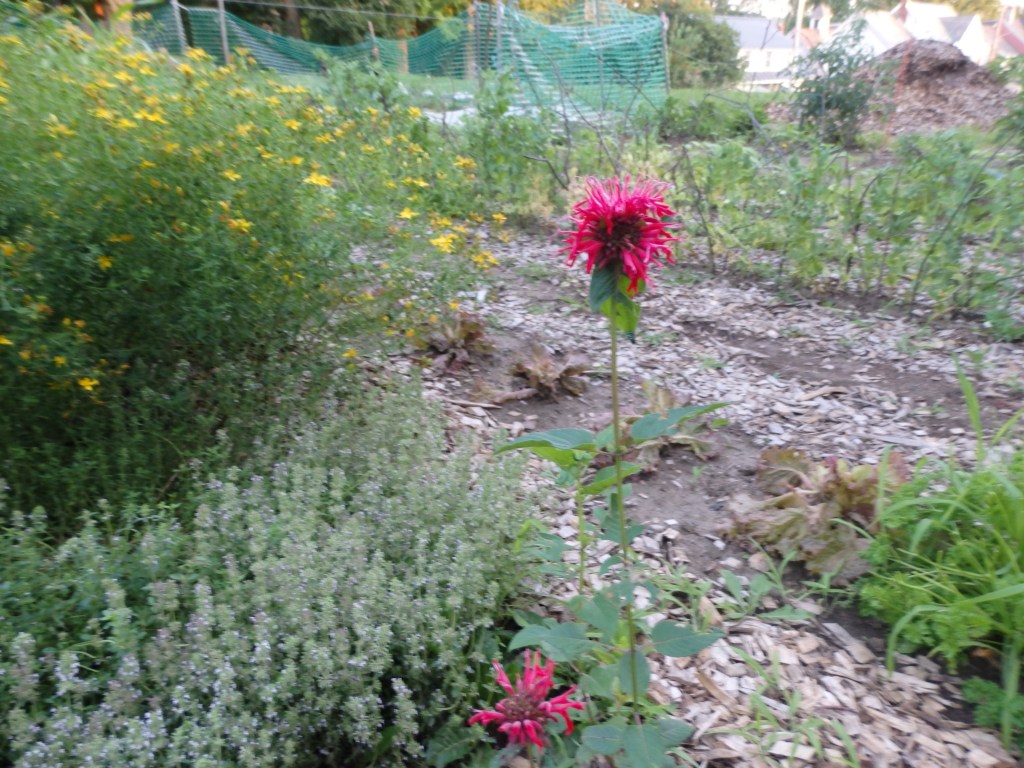
This flower is hardy to zones 3-9, prefers moist soil, grows 36-48, and produces beautiful red flowers in July. It is native to Maine and Michigan south to West Virginia, Ohio, and northern Georgia. It lives up to its name and is one of the best for bees and is also popular with hummingbirds. Its leaves can also be made into a tea and was a Native American remedy for sore throats.

Wild blue phlox (phlox divaricata)

This flower is hardy to zones 3-9, prefers moist soil, grows 12-14 inches, and produces violet or lavender blue flowers in the spring. It is native to northwestern Vermont, Quebec, and Minnesota south to Georgia and Texas.

Creeping phlox (Phlox stonifera)

This plant is hardy to zones 4-9, prefers moist soil, grows 6-10 inches tall and produce blue lavender or white flowers. It is native to the Appalachian region, Pennsylvania, Ohio, and Georgia.

Spicebush (Lindera bezoin)

This shrub is hardy to zones 4-9, prefers moist soil and can grow up to 10 feet. It has clusters of yellow flowers from March to April, red fruit in summer, and has bronze to yellow leaves in autumn. It is native to Maine and Michigan and south to Florida and Texas. It is an important larval food source for the spicebush swallowtail.

Cinnamon clethra (Clethra acuminata)

This shrub is hardy to zones 5-8, prefers rich moist soil and grows to 15 feet. It has white flowers in July and August with yellow foliage in autumn. It is native to Pennsylvania, Kentucky, western Virginia, Tennessee, and south to Georgia.

Downy Serviceberry (Amelanchier arborea)

This tree is hardy to zones 4-9, prefers well drained soil, and can grow to 25 feet. It has white flowers, red-purple fruit in late spring to early summer with orange and yellow foliage in autumn. It is native to Maine, New Brunswick, and southern Quebec, and Michigan south to Florida, Louisiana, and eastern Oklahoma. (There are several varieties of serviceberry, many of which have been included in previous gardening articles, but this is the one that is shade tolerant).

American Holly (Ilex opaca)

This tree in hardy to zones 5-9, prefers moist soil, and can grow up to 50 feet. As is generally well known, it is an evergreen with red fruit through the winter. It is native to Maine and south to Kentucky, Virginia, southern Missouri, Florida, and Texas.

Full Shade: These plants can tolerate shade for a significant part of the day.

Yellow trout lily (Erthronium americanum)

This flower is hardy to zones 3-9, prefers moist soil, grows 3-6 inches and has yellow flowers in early spring with mottled leaves. It is native to Nova Scotia, western Ontario, Minnesota, and south to Florida and Alabama. The white trout lily (E. albidium) is very similar, except is has white bell shaped flowers, often tinged with lavender. It is native to Ontario, New York, South Dakota, Minnesota and south to Georgia, and Texas.

Wild stonecrop (Sedum ternatum)

This flower is hardy to zones 4-9, prefers moist soil, grows 4-8 inches and has small white flowers in late spring. It is native to New Jersey, Iowa and south to northern Georgia and Arkansas. It is also good for several species of butterflies.

Mountain winterberry (Ilex Montana)

This tree is hardy to zones 5-7prefers moist soil, can reach up to 30 feet and has white flowers in late spring with red fruit in early winter. It is also very shade tolerant. It is native to New York, south to Tennessee, Georgia, and eastern Alabama.

Shadier yards, balconies, and plots are more of a challenge for growing. Nevertheless, there are still several plants which can tolerate shade as well as provide much needed food sources for wildlife. An increasing number of bird, butterfly and bee species are endangered or facing population declines. Having places to rest and refuel is also a major boon to migratory species, such as monarchs. In addition, eliminating pesticides and fertilizers is also an important step. Other good resources for wildlife gardening include Native Plants of the Northeast by Donald J. Leopold and the National Wildlife Federation. At http://www.nwf.org you can go to plant finder, put in your zip code and the site will provide several suggestions well suited to your area. And of course, there are my previous wildlife gardening articles, which include topics of plants that bloom at different times of year(2020), plants that are suited to smaller spaces (2021), and plants that can be food for both wildlife and people (2022). Happy Spring!

OLYMPUS DIGITAL CAMERA

Bee balm at my garden at the Elmwood Community Garden in Barre, VT.

High Speed Rail Offers Potential

So, if you were going to travel, how would you go? A car? A plane? A train? What about high speed rail if it were available? Transportation is the biggest contributor to greenhouse gases and finding alternative forms of transportation is an important factor in addressing pollution and the changing climate. Though there is no single form of transportation that will serve all needs all the time, high speed rail may offer one potential solution.

William Wong, of the Federal Railroad Administration at the US Dept. of Transportation, said that high speed rail is officially defined as rail that can travel at speeds of 180 miles per hour and travel through corridors with no grade crossing. While he noted that Amtrak’s Acela can reach speeds of 150 mph on certain segments of the Northeast Corridor and the Brightline in Florida can go 125 mph, there has never been a true high speed rail in the US. Japan started the Shinkansen line connecting Tokyo and Osaka in 1964 ahead of the summer Olympics. In 1965, Congress approved the High Speed Ground Transportation Act, which was an effort to develop high speed technology in the US, but those appropriations ended in 1975. Wong also said that American passenger rail largely operates on track owned by freight companies and high speed rail can only operate on a line built specifically for that purpose. He said that in the absence of long term funding and the construction of high speed rail corridors, passenger rail must run at lower speeds.

Roger Hill, an operational meteorologist based in Worcester, VT, said that high speed rail would be “awesome” and would not produce as much carbon emissions, which have contributed to floods and other extreme weather events.

Wong said that the environmental benefits between conventional rail and high speed rail were quite similar. However, he also cited a study from Dec. of 2022 that supported longstanding research that rail is one of the most sustainable forms of transportation. The report compares 4 different trips and looks at what the carbon footprint would be for each trip with different modes of transportation. The emissions are calculated based on kilograms of CO2. The trips in the report are as follows:

Boston to New York for 1 person:

Electric Rail-25.3

Bus-26.7

car-135

Plane-141.1

Los Angeles to San Diego for 1 person

Bus-15.2

Rail-44.2

Car-87

Air-105

Washington D. C.-Orlando for 4 people

Bus-111.1

Car-137

Rail-224.2

Air-246.6

St. Louis to Chicago for 1 person

Bus-37.1

Rail-47.3

Plane-184.4

Car-193.9

The report states that emissions were estimated by round trip. While the report acknowledges that these are not perfect comparisons, because miles for each trip vary, it states that the locations were chosen based on geographically diverse areas as well as ones that had access to all four modes of transportation. The rail routes had the most miles in the Boston to NY and LA to San Diego routes, while the bus had the most miles in the DC to Orlando and St. Louis to Chicago routes. In its conclusion the report states that cars were the most intensive, though air was the most for a shorter trip. It also said that electric trains had the lowest emissions for all modes in the study with the potential for no emissions if they were powered by 100% renewable energy. The report also states that when making comparisons, the full life of vehicles need to be taken into account, such as emissions from production, maintenance, and recycling or disposal at the end. It also notes that passenger decisions are complex and involve time, convenience, and accessibility and all these need to be taken into account as well. However, it says that rail has “a role to play in reducing emissions.” The Union of Concerned Scientists and the Department of Energy were contacted for interviews, but neither responded.

As previously noted, no single form of transportation will fit all needs all the time. However, looking for multiple solutions including greater expanding public transportation, as well as having vehicles powered by renewable energy can go a long way to meeting transportation needs and reducing our effect on the environment.

For more on transportation and the climate, please see my articles from Aug. of 2021 on the NOAA report on climate normals, Dec. of 2021 and May of 2022 on renewable diesel, and Nov. of 2023 on hurricanes.

The Christmas Bird Count Tracks Population Changes

Is that really a bluebird in December? Just an aberration or part of a larger pattern?  Wouldn’t it be fun to know what other people are seeing and be part of an important conservation effort a as well? The Christmas Bird Count (CBC) is one way people can make their sightings official and track both changing populations and migrations. It runs from December 14 to January 5 and 2023 will be the 124th year. It is one of the longest running wildlife censuses in the world. Jillian Liner, the Director of Conservation for Audubon VT, said that it shows how birds are doing and where they are. She also said that the length and scope of it are two of the most important aspects of the CBC.   

Liner said that CBC data has been noting some recent trends in migration patterns and behavior. One example she gave is that bluebirds have been either staying longer into the winter or not migrating at all due to increasingly milder winters. While December may seem like an odd time to do a bird count, Liner said that it is a time of year when birds are mostly “settled” and the CBC can capture birds in a largely permanent location. 

If people are interested in participating, they can go onto the Audubon website and get contact information for their local area. Liner said however, that people can also call the local Audubon chapters. Participants go out in 15 mile wide circles and they record their sightings on paper of both species and total numbers of birds seen. The circles are run by a compiler who organizes volunteers and submits the data. Liner also said compilers will usually pair new birders with more experienced birders as well.

Prior to the twentieth century, hunters held a Christmas “side hunt” in which they competed over who killed the most birds. As concerns over declining populations grew, scientists looked for ways to encourage conservation. Ornithologist Frank Chapman proposed a Christmas bird count and the first one was held in 1900. It included 27 birders in locations from Toronto to California and tallied 90 species. By comparison, according to http://www.audubon.org, last year’s CBC included 79,005 observers with a total of 40 million birds counted from 2500 different species.

Counting birds and other wildlife shows population changes and can also provide data as to what conservation measures might be needed. However, there are far more birds than scientists can count on their own and having volunteers gives a more accurate data set. In addition, it is a chance to connect to the larger world and maybe have a new and fun experience. (For more on community science and wildlife in the winter, see July 2023 and February 2021 articles).  


Storm Warning: Wind, Water, and Air Influence Hurricane Formation

From wildfires to flooding to weeks of triple digit temperatures, nearly every part of the country experienced some form of extreme weather over the last few months. Though hurricanes are one form of extreme weather that frequently makes headlines, this year didn’t see any on the scale of some previous storms, such as Katrina or Maria. While overall trends are still being studied, knowledge of what causes hurricanes as well as other weather events is key to a greater understanding of how wind, water, air, and our effect on them are all connected.

Both ocean temperatures and atmospheric conditions play a role in the formation of hurricanes. The National Oceanic and Atmospheric Administration (NOAA) states that the official definition of a hurricane includes rotating circular winds with an “eye” surrounded by an “eyewall” where winds are the strongest. In the northern hemisphere, winds rotate counterclockwise and in the southern hemisphere, they rotate clockwise. Jessica Storm, a meteorologist with the National Weather Service in Burlington, VT, said that the reason for the difference between hemispheres was due to the Earth’s rotation. Philippe Papin, a hurricane specialist with the National Hurricane Center, which is part of the NOAA, said that ocean temperatures generally need to be around 79-80 degrees Fahrenheit, though he noted this was not a “hard and fast rule” and that hurricanes could form in lower temperatures. He said that unstable air conditions, which allowed thunderstorms to grow and intensify, were also an important factor in the formation of hurricanes. Storm concurred stating that a cooling atmosphere creates moist air which can contribute to hurricane formation. She also noted that hurricanes tend to form within 300 miles of the equator because that is where warmer ocean temperatures tend to be. The official “season” starts June 1 and runs until November 30, but hurricanes can happen at other times.

Hurricanes are divided into 5 categories based on wind speed and the Saffir-Simpson scale is as follows:

Category 1: 74-95 mph

Category: 2 96-110 mph

Category 3: 111-129 mph

Category 4: 130-156 mph

Category 5: 157 or higher

Storm said that the vertical wind shear, which is the change of wind speeds in different parts of the atmosphere can influence the strength of a hurricane. Papin said in addition to wind shear, a lot of moisture can also play a role in a hurricane’s strength. According to the NOAA National Hurricane Center’s data by decade on hurricanes to hit the US from 1851-2022, the decade with the most hurricanes was from 1941-1950 with 24 total storms. It was also the decade with the most category 3-5 storms with 5 category 4 storms and 5 category 5 storms. From 1851 to 1935 there were 161 total hurricanes to hit the US and 46 storms that were category 3-5. From 1936 to 2020 there 141 total storms with 48 that were category 3-5. The above statistics represent the 17 full decades covered by the data. However, from 2021-2022, there were 3 storms to hit the US and 2 that were category 3-5. (Both of those were category 4). Papin noted however, that earlier records are “spotty” and satellite images as well as surface temperature observations have greatly improved over the last 50 years.

El Nino years affect hurricane activity. El Ninos result from an increase in ocean temperatures of 0.9 degrees for at least 5 successive overlapping 3 month seasons. Trade winds along the equator weaken and low pressure over Australia and Indonesia rises. This prevents normal upwellings of nutrients and causes fish to migrate. El Nino years have strong upper level winds, which Storm said can “topple” hurricane winds, which are more likely to be in the lower part of the atmosphere. Papin said that in the Atlantic El Nino years generally result in less hurricane activity due to more change in wind speeds. However, he said that in the Pacific, they tend to have the opposite effect because of warmer ocean temperatures.

Papin said that there is “some evidence” that hurricane activity is increasing in the Atlantic, but in the Pacific, hurricanes have been staying about the same or decreasing, but the evidence is “not conclusive.” He also noted that a warmer atmosphere holds more moisture which thus leads to more rainfall. As mentioned in the beginning of this article, the year 2023 saw quite a number of weather-related events. Water temperatures, wind, and atmospheric conditions all influence both the formation and strength of hurricanes. The climate is a complex topic, with many forces that affect it and sometimes those forces can seem to contradict each other. Nevertheless, an understanding of how wind, water, and air are connected gives us a greater understanding of how our climate works and our effect on it.

(For other climate related articles on this blog, see two on wildfires from Oct. and Dec. 2019 and one on climate averages from Aug. 2021).

Citizen Science Offers a Chance for Exploration

Was that the lost satellite? In 2018, a citizen scientist looked up at the sky and contacted NASA to say he believed he had found the missing IMAGE satellite, which they had lost contact with in December of 2005. According to science.nasa.gov, NASA confirmed the ID and verified it was in fact the missing satellite. While not all citizen scientists will achieve instant fame, they play an important role in research. All over the world, people go out and record sightings and their data is uploaded which helps scientists track migrations, rare species, and find invasive species.   This can then be used for directing public policy and protecting important habitat.   

Dr. Tina B. Phillips, Assistant Director for the Center for Engagement in Science and Nature at Cornell University, said that citizen science advances scientific knowledge on “large geographic scales” and can give scientist the “big picture” on species ranges and well as detecting invasives. She also said participants gain knowledge and acquire new skills. In addition, Phillips also noted citizen scientists can help their own communities by collecting air and water samples, which can then be used to make changes in regulations and living conditions.

Phillips also stated that scientists are limited by the regions they live in whereas citizen scientists can be the “eyes and ears” collecting far more data than scientists would be able to do on their own. Dena Podrebarac, the Milkweed Coordinator for Monarch Watch, concurred saying citizen scientists are able provide more research than a much smaller number of scientists would be able to do. She also noted that there is a move to change the name to “community science.” Podrebarac also stated that citizen or community science can further knowledge, raise awareness, and create education opportunities. Phillips noted some good projects included several of the ones done through Cornell University, such as E-bird. She also recommended Galaxy Zoo and Scistarter.org. In addition, the National Wildlife Federation and citizenscience.gov also have listings of several citizen science projects.

E-bird-This is run through Cornell University and people can share sightings, update lists of all birds they’ve observed, and archive photos and sounds. 

Monarch Watch-This is done through the University of Kansas.   People tag monarchs as well as record tag number, date, and location of other butterflies.  monarch@ku.edu.

Monarch Calendar-People record the number of monarchs they see each day during the migration periods. In the South this is done from Aug. 1 to Sept 25 and in the North it is done from July 15-Aug. 20.  

Nonindigenous Aquatic Species Program-People verify the occurrence and distribution of nonnative animal and plant species.   Observations can be made through an online reporting system.   http://nas.er.us.gs.gov.

Citizen scientists play an important role in their communities and in the world. There are far more citizens in many more places than there are scientists and that is what allows citizen scientists to collect much more data. In addition, it gives people the opportunity to get outdoors, learn about their ecological neighborhood, and cultivate the next generation of scientists.

Growing Endangered Flora Benefits Pollinators, People and Plants

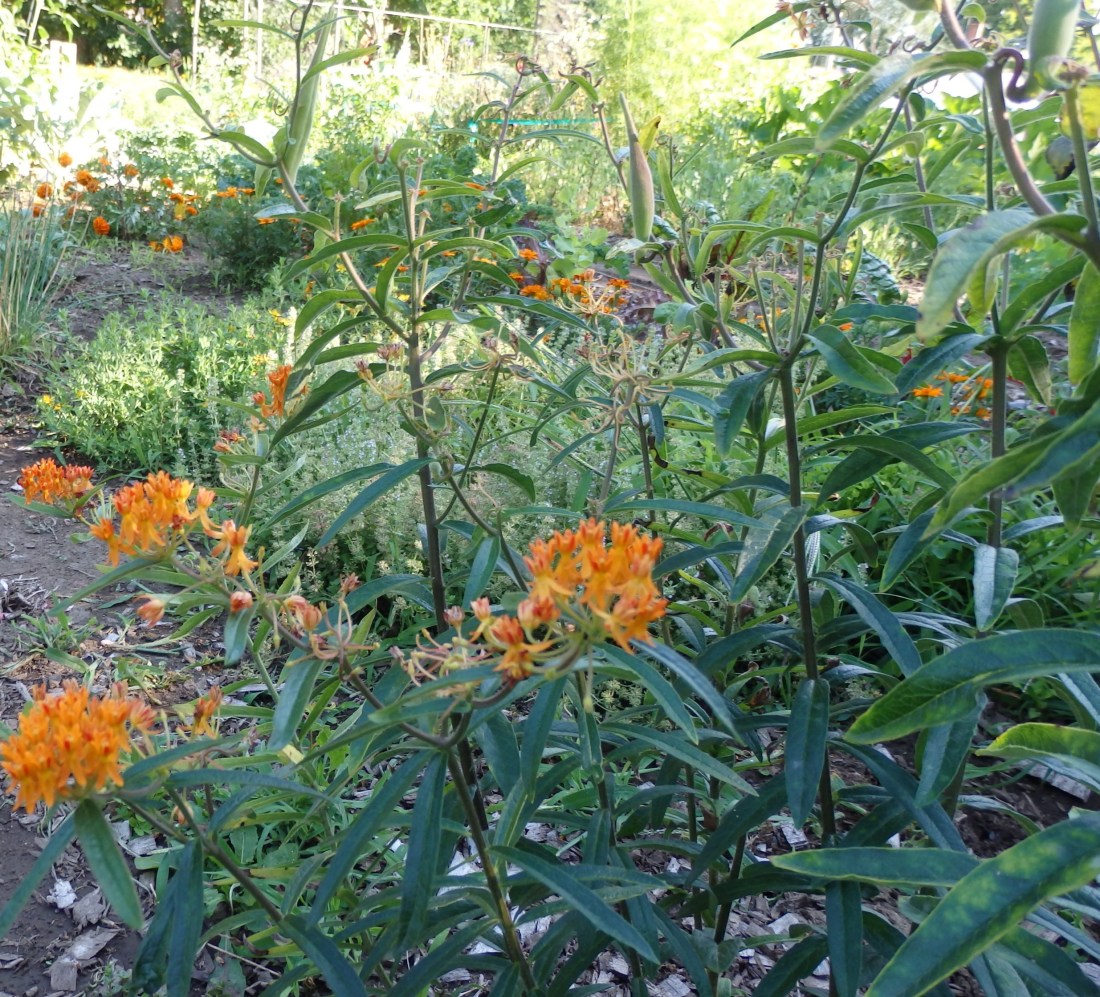
Butterfly weed from my garden at Elmwood Community Garden, Barre, VT

Photo at top: Butterfly weed at my garden at Elmwood Community Garden, Barre, VT

The monarch alighted on the pale green milkweed growing amongst patches of purple and orange. All along her journey north she had not seen this particular flower before. Mead’s milkweed, where the monarch stopped, is a threatened species. As was stated in the previous article, endangered plants are generally less well known than animals, but growing them in gardens, so long as legally purchased, can be a major benefit to both the plants and the animals that depend on them. This year’s gardening article will pair with the last one in that it will feature a few endangered plants, but will also bring back some old favorites.

Flowers:

Mead’s Milkweed (Asclepias meadii) It is listed as threatened on the U.S. Endangered Species List. As a member of the milkweed family, it is the only type of flower monarch butterflies will lay their eggs on. It has pale green flowers, and was once widespread across the Midwest, but has been decimated by agriculture, urbanization, herbicides, and invasive species.

Butterfly weed (Asclepias tuberosa) This is not an endangered species, but is a popular flower with many species of butterflies. As member of the milkweed family, it is also a host for monarchs. It grows 1-2 1/2 feet, produces orange flowers from mid summer to early fall and is native to New Hampshire to Florida west to Minnesota and south to Arizona and Mexico.

Bee balm (Monarda didyma) Also not endangered, but another old favorite. It produces beautiful red flowers in July and, as its name implies, it is a favorite of bees. It grow 2-5 feet and is native to Maine west to Michigan and Ohio and south to northern Georgia.

Smooth coneflower (Echinacea laevigato) The smooth coneflower is a close relative of the more common and better known purple coneflower (Echinacea purpurea). The smooth coneflower is listed as threatened on the U.S. Endangered Species List. It is native to the Midwest, but fire suppression and agriculture have destroyed much of its habitat.

Western lily (Lillium occidentale) It is listed as endangered on the U.S. Endangered Species list. It is native to southern Oregon and northern California, but coastal development, cranberry farming, poaching, and draining wetlands, have also reduced much of its habitat. It is a popular flower with hummingbirds and produces more nectar than any other U. S. lily.

Sundial Lupine (Lupinus perennis) It produces purple-blue flowers in late spring and is the only host plant for the endangered Karner blue butterfly. It grows 8 inches to two feet, requires sun dry to average soil and is native to Maine south to Florida and west to Minnesota and Indiana.

Shrubs:

Serviceberry (Amelanchier canadensis) It grows 8-15 feet tall and produces white flowers and red berries which are also edible for people. It requires sun to part shade in average soils. It is native to Quebec and Maine to Minnesota, New York, Michigan, Iowa, and south to North Carolina. The western serviceberry (Amelanchier alnifolia) also produces fruit in early summer which is edible for both birds and people and is native to western Minnesota, Colorado, and northern California.

Hazelnut (Corylus americana) This shrub grows about ten feet high and produces flowers in early spring. It requires sun to part shade and is native to Maine west to Saskatchewan south to Georgia, Louisiana, and Oklahoma.

Raspberry (Rubus odoratus) It flowers in summer and is good for birds. It is native to Maine west to Michigan and south to North Carolina and Tennessee.

Blueberry (Vaccinium carymbusum and V. angusifolium) V. carymbusum is the high bush blueberry and V. angusifolium is the lowbush blueberry which only gets 12 inches high. They flower in spring and fruit in summer and are one of the best shrubs for wildlife. They require sun to part sun. Lowbush needs dry soil, while highbush needs moist soil. They are native to Newfoundland west to Illinois and Michigan and south to North Carolina.

Trees:

American Holly (Ilex opaca) This is a tall tree which can reach forty feet, so it is not ideal for a smaller space, but it is good for birds in winter and adds a little green to the winter landscape. It need sun to part shade and is native to Maine south to Maryland and Virginia and west to Texas and Kentucky.

Pygmy fringe tree (Chionanthus pygmaes) It is listed as endangered on the U.S. Endangered Species List. It is smaller than its close relative the white fringe tree (Chionanthus virgenicus), which grows about 25-30 feet tall. The white fringe tree is not listed as endangered, however, as part of the ash family, both are susceptible to the emerald ash borer, an invasive pest from Asia. (For more on the emerald ash borer, see my previous article on this subject October 2018).

Native plants provide better habitat and more food for butterflies, bees, and birds than do introduced ones. In addition, native plants add food and color for people as well. If a few endangered plants can be added in that is an extra benefit. If you are considering any of the plants mentioned above, be sure they are native to your area and that they have been purchased from a reputable business, as poaching is also a problem with some endangered plants, particularly orchids and cacti. A few good resources are Donald J. Leopold’s Native Plants of the Northeast and the http://www.nationalwildlifefederation.org. At the National Wildlife Federation website under native plant finder, it is possible to plug in your zip code, and the site will bring up all plants native to your area. Happy Spring!